Books on Games, Virtual Worlds, Simulations, Cognitive Studies, and Performance Improvement

In the cue-

Reality Is Broken: Why Games Make Us Better and How They Can Change the World by Jane McGonigal

Fun Inc.: Why Gaming Will Dominate the Twenty-First Century by Tom Chatfield

Reading-

Neuromancer by William Gibson; an old science fiction/cyberpunk book, but where much of the thinking on VR/VWs got started. I guess Snow Crash by Neal Stephenson would come next.

Read-

Infinite Reality by Jim Blascovich and Jeremy Bailenson
Note: great book. Well worth the read. Will post a blog once I digest my thoughts on this.

Brain Rules: 12 Principles for Surviving and Thriving at Work, Home, and School by John Medina

The Checklist Manifesto: How to Get Things Right by Atul Gawande

Learning in 3D: Adding a New Dimension to Enterprise Learning and Collaboration (Essential Knowledge Resource (Pfeiffer)) by Karl Kapp and Tony O’Driscoll

Learning Online with Games, Simulations, and Virtual Worlds: Strategies for Online Instruction (Jossey-Bass Guides to Online Teaching and Learning) by Clark Aldrich

Previous Posts

« Older Home
Loading Newer »

Get Ready for the Storm-Part IV

The Hurricane Irene simulation continues….

————————————————————————————————————————————————-

Alert issued 10/6/11 at 8:00 AM. Mayor Bloomberg has ordered a MANDATORY EVACUATION of Zone A citywide and the Rockaway Peninsula. All or part of your zip code is under an evacuation order. Please refer to OEM’s Hurricane Evacuation Zone Finder at http://gis.nyc.gov/oem/he/index.htm.  You may also contact 311 to find out if you need to evacuate.

The sender provided the following contact information.
Sender’s Name: Notify NYC
Sender’s Email: notify1nyc@oem.nyc.gov
Sender’s Contact Phone: 212-692-9175

Get Ready for the Storm-Part III

The Hurricane Irene simulation continues….

You watch the following Newscast. Hurricane Irene appears to be bearing down on NYC.  You and some of your staff assigned to the Coastal Storm Plan receive a second notification that you will be deployed in the next 48 hours to an Evacuation Center.

How do you prepare yourself and your family?

The Hurricane Irene simulation continues….

This past Sunday you receive a call from your elderly mother (87 years old) who lives in Far Rockaway- see http://t.co/jQRlm5ir -She normally has a home healthcare aid who checks in on her 3 times a week, but otherwise she is somewhat self sufficient. She is worried about the coming storm, but her neighbors, many of them immigrants who have never experienced a severe storm in NYC tell her that they plan to stay.

What do you tell her?

You and several of your staff receive notifications via NotifyNYC like the following:

BEGIN MESSAGE

————————————————————————————

SWN-Alert issued 10/4/11 at 8:00 AM. Mayor Lewis has activated the Coastal Storm Plan.
You are being notified as you may be asked to report to an Evacuation Center.
Please reply to this message if you are available. If you are available to report to an
Evacuation Center then reply with a 1. If you are not available, then reply with a 2.
Please refer to OEM's Hurricane Evacuation Zone Finder at http://gis.nyc.gov/oem/he/index.htm.
You may also contact 311 to find out if you need to evacuate.
The sender provided the following contact information.
Sender's Name: Notify NYC
Sender's Email: notify1nyc@oem.nyc.gov
Sender's Contact Phone: 212-###-9175

————————————————————————————

END MESSAGE

Several  of your staff tell you they have plans this weekend. Others say they have kids at home that they need to take care of, and as single parents, they cannot leave them for long with other family members. You yourself have your own children at home, but your husband will be at home this weekend which will free you up if you are called upon.

What do you tell your staff?

Follow this simulation on Twitter at #irenesimulation or check back here later this week.

Get Ready for the Storm-Part I

Join this serious game, a.k.a., simulation, as we put you in the role of emergency responder.

Anders Gronstedt and I will be conducting a live demonstration of NYC’s Hurricane Shelter Simulation course in-person at the North American Simulations and Gaming Association this Thursday, October 6 at 10:30AM.

Simulation begins below…..

———————————————————————————————————————

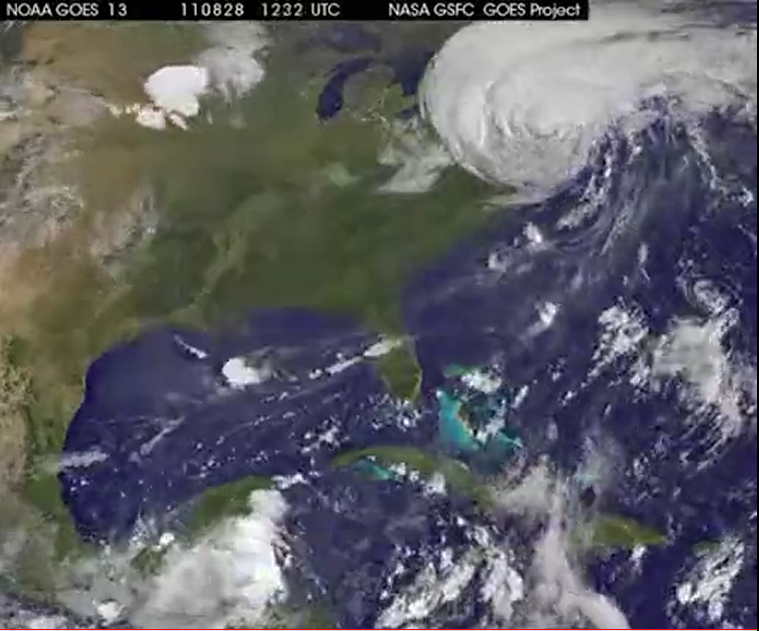
Hurricane Irene is due to make landfall next Saturday. Watch this report

You live in Breezy Point, NY and work for the New York City Department of Housing Preservation Development

Are you ready? Watch the video: what would you do to get your household ready? What steps will you take to alert your organization, your staff?
Come join our demonstration in Second Life and get ready for a role of a lifetime.

Follow us on Twitter at #irenesimulation or check back here later this week.

@-It-Tude!

A documentary is coming out called Connected, about the degree to which we are connected through technology, its impact on our lives, and the degree it has changed human relationships. Check the trailer out http://youtu.be/rUBjnk_9n8Y

Can’t wait to see it.

Now this conjures up an extremely relevant issue for training (corporate, mandatory, etc.) and education as a whole and that is one of attention, motivation, and attitude of both the instructor (trainer, teacher; call them what you will) and the learner. Do we have your attention? or is it divided from the lesson, the lecture (Ugh!), or exercise.

This goes back to my original blogpost on Information Ubiquity. Further to this, it is not just the plethora of content we are exposed to but the human connections, with friends, families, colleagues that we want to keep up with on Facebook, Twitter, LinkedIn, YouTube, etc.

Which all leads to me to my pitch in how we might address it: through @-It-Tude. Keeping the learner, ourselves, and our teams  At-It: at the task, at  attention, and actively learning and pursuing their goals rather than being unproductively distracted.

So here is my open ended inquiry out to the universe:

Tell me how you focus yourself and your learner’s attention in an over-messaged world

You can join the conversation by replying here, to a Twitter conversation using the hash tag #learningattitude, or at Facebook.


Sleepover for a Thousand

For the past 4 years I have been Project Director for Coastal Storm Plan Training, based at the City University of New York School of Professional Studies. With both classroom and online courses, we trained over 25,000 City storm staff and volunteers for their responsibilities in the emergency sheltering system for New York City. I was deployed to a Hurricane Shelter and worked a 30 hour shift from 8AM Saturday to 2PM Sunday.  The following is a short chronicle of my experience.

Noon Friday Aug. 26, Downtown Brooklyn I arrived at the Unified Operations and Resource Center (UORC- pronounced U-Rock), the command center of the emergency sheltering system. My colleague at the NYC Dept. of Homeless Services who is manager of the facility had accepted my offer to help with any coastal storm preparations in advance of Hurricane Irene, a Cat. 2 Storm predicted to make landfall around noon Sunday.

When I arrive there are about dozen staff and a couple of managers fielding phone calls and tracking status of evacuation centers and their related shelters. After warm greetings from colleagues I had worked with for years, they soon dispatched me and a colleague from the Regional Catastrophic Planning Team (RCPT) to rove around and help out with Evacuation Centers, the first stop for staff and evacuees before they are settled in an emergency shelter.

1:30PM Bushwick High School, Brooklyn Prior to arriving I find out who the Evacuation Center Manager is, and when we enter the school we proceed to the Command Center where we find staff unloading the administrative supplies. The Evacuation Center Manager is a little unsure of himself, so we run through the Evacuation Center Field Guide, a step by step checklist of all the procedures needed to open up, run, and shut down the facility. We spend the next hour and  a half doing a walk through with the Evac. Center managers and the Dept. of Education Facility Manager doing a walk through to identify different functional areas in the facility, going over the assignment of staff, and troubleshooting some issues. He takes over and continues to follow the next steps in the field guide. We roll out to the next Evacuation Center.

3:00 PM John Jay High School, Brooklyn This high school is in my neighborhood of Park Slope. We arrive at the Command Center and find them unloading the administrative supplies. The Evacuation Center Manager apprises us of where they are in the process of setting up and shows us the unloaded supplies along the hallways, numerous pallets of supplies: food, water, hygiene items, medicines, cots, blankets, baby formula and other essential provisions. All of these supplies were prepositioned and shipped to all facilities just in time before storm landfall and were sufficient to sustain the shelter population to ride out the storm and get back home. After some troubleshooting, we ensure they are logged into the shelter management system Sahana that registers both staff and shelter clients. The outside calm, with Brooklynites enjoying the good weather in late Summer, belies the preparations for the expected storm.

5:00 PM York College, Jamaica, Queens After a long drive through Brooklyn and parts of Queens, we pull up to the sprawling campus of York College, part of the City University of New York (CUNY)- the university I work for. After locating the Command Center and finding the Evacuation Center Manager who is glad to see us, we sit down with him and his managers to evaluate where they are in preparations. They have received some supplies with more on their way, they have begin setting up cots but have set most aside, just as they are supposed to (more on that later). This facility is a combination Evacuation Center, Hurricane Shelter, and Special Medical Needs Shelter, the latter designed to accommodate shelter clients whose medical needs exceed the capabilities of a general population shelter but do not warrant being in the acute care of a hospital. These were set up in order to avert a huge demand on the hospitals both at a time of shrinking hospital beds due to closures and in anticipation of the surge of people from nursing care or skilled care facilities that have no alternative emergency housing for their clients.

We tally their staff and realize they are understaffed at the moment and have managed to fill the gap through the volunteering efforts of York College facility and staff resources that have pitched in to help even though they are no where on the list of storm staff. We call in a request for additional staff to the UORC and then do a walk-through to assess the space and what functional areas have been set up. They have made good progress considering the staff shortages although the next day will bring a massive outpouring of evacuees from the Rockaways, a long barrier island that faces the Atlantic Ocean and is right on the storm’s path. Still a Cat.2, Irene could decimate this primary flood zone, so a mandatory evacuation has been order for the tens of thousands there as well as other Flood Zone A areas throughout the City.

A couple of car loads of evacuees arrive at the facility while we are there. Come morning they will need a full complement of staff resources to manage the onslaught of evacuees. After tracking down the Operator Package, containing field guides and other procedures, and making sure they know the rest of the steps we head back to base to get a picture of the sheltering system status.

7:30 PM, Unified Operations and Resource Center, Downtown Brooklyn Arrived to find the UORC staff in a hive of activity with a board for each solar system, the Evacuation Center and its Hurricane Shelter and possibly a Special Medical Needs Shelter. It indicates staffing levels and supplies.

After a couple of quick conversations of where things are, I sit down to grab a quick bite of some food that was ordered in and talk to a long time colleague from NYC OEM who is very tired and is fretting about that last facility I had visited. He asks me whether I might be able to deploy there the next day to help them set up and manage the evacuation and shelter activities.

With my wife and two young children out of town in the safety of our friends’  home in Western Massatchusetts and a class I was supposed to teach the next day cancelled, there was nothing keeping me from volunteering. It had been years  (since 1996) that I had not worked in emergency relief, so I was itching to do it. In a conversation with my wife that evening, she expressed to me her nervousness about my taking on this task, most of all about any unknown dangers. I assure her it will be alright and that it is the right thing to do. I agree to take on the task. I leave around 9:30PM and get home late tired and ready to head to bed for the very long day ahead of me.

8 AM Saturday, Aug. 27, York College, Jamaica, Queens I arrive at the gym where the Command Center and registration area was set up. At the security desk, they direct me to sign in as a staff member. Good I think to myself, they have organized the registration process, as I sign in and show my ID. When I get to the Command Center, an inner office close the entrance, I introduce myself and ask for the Evacuation Center Manager. He and the other two managers, Hurricane Shelter Manager and Special Medical Needs Shelter Manager, introduce themselves and we set to work reviewing the setup checklist. Have they received and stored supplies? Check. Have they set up some of the cots? Check. Have they assigned staff positions? Some but not all, most of the  Evac. Center positions but few of the Hurricane Shelter staff positions. We plan to double up once the evacuation phase is over and we transition to sheltering operations. We will fill positions as more staff arrive throughout the day. Roughly 50 shelter clients (evacuees) arrived during the previous night.

After reviewing some of the other key steps, we meet up with the head of security. We proceed to walk-through the facility to see where they have set up different areas of the evacuation screening areas and shelter. We look over the room where they have the Special Medical Needs (SMNS) operation set up, downstairs in a lower floor. 30 Westcots (these are special emergency cots, more durable and suited for medical use) have been set up, with medical supplies unloaded neatly on a table, medical equipment standing nearby and about 200 or more cots that have not been unpacked. They mentioned they have additional roughly 150 Westcots set up across the street. We speak with the head nurse and a doctor and quickly conclude that the space will be inadequate. Not only is there limited space for additional cots, but I am told by the head of security that at the back of the room they experience roof leaks and there are double doors to the outside. With heavy rains expected this area could take in water making it unsuitable for use.

I ask if we can see the building across the street to assess whether there is suitable space for the SMNS. The group of us, managers, medical, and security march across to the larger building where classrooms, lounges, and dining areas are located and inspect the ground floor, second floor, and third floor. During the night, a unit of firefighters came in and set up 150 cots on the second floor. The only problem is that they are exposed to the skylights above and to broad windows at the front of the building. With heavy rain water can leak in and high winds and the possibility of tornados, common during hurricanes, make this area unsafe. They need to be moved.

The cavernous ground floor, covered and far from exposed windows is deemed adequate for the SMNS, and I ask the head nurse to layout how she wants the beds situated, creating the different sections according the triage plan, red for high level care, yellow for medium level, and green for minimal level. Now the hard part will be moving all of the equipment supplies and beds over. It has started to rain, not heavy, but enough to cause some worry that it will worsen.

I ask the head of security if he might provide some staff resources to help us move the cots, equipment and medical supplies, and he details a number of the facility staff to help. We need more but for now we will make due. I get back to the Command Center and my supervisor in my normal work life (far from my mind now) arrives to help out. I ask if she would take on helping to manage the flow of evacuees arriving and registering by facilitating the flow to specific areas. In addition we needed to designate additional rooms in the large building on the second floor away from the skylights and front windows. More importantly we need to start creating some clearer roles and separate the Evacuation Center operations from the Hurricane Shelter operations at least for now.

A call comes in from the medical staff downstairs. There is a new person in charge, and I head downstairs to meet him. He is from Queens Hospital, part of the Health and Hospitals Corporation (HHC) of NYC, and is the supervisor for the medical staff, 19 nurses and doctor, in the facility. He wants to help, but tells me he is concerned about the medical staff tiring themselves out by moving cots and equipment around. I acknowledge the problem and head back upstairs to see if we can find more staff resources. As I head back upstairs another call comes in and there is a problem across the street with buses.

Before heading across the street, I notice a unit of national guard soldiers outside the entrance. I stop and ask who is in command. Sgt. Hope (not kidding) tells me he is the unit commander, and he pulls out a sheet of paper where the mission is printed. I quickly read it over and it fits the bill; Can he assist with moving the cots and speak with the head of security and the head of the SMNS medical to coordinate that movement. He says right away. Thank you NY National Guard!

During the afternoon as the rain started softly and then increased to a steady drizzle with the first lashing of heavy winds, busload after busload arrived to drop off evacuees. It started as a small trickle in the morning until late morning when police were needed to direct traffic. MTA and school buses brought able bodies evacuees, families, some elderly, and single adults. Ambulettes,, Access-a-Ride, and min-buses brought many evacuees from nursing home and adult care facilities. Most of those who arrived on our doorstep were evacuated from the Rockaways. By mid-day we had reached around 700 evacuees, by nightfall we had over a 1,000.

On top of the onslaught of those arriving for shelter we had an outpouring of volunteers. Young folks showed up from the Mayor’s office, a group from the Chinese Aid Society, Community Emergency Response Team (CERT) members, and a number of others. We had set up a room for our Just-In-Time Training courses, a set of video based courses that introduced staff to the basic functions and job responsibilities in the emergency shelter and guidelines that they needed to follow. After an hour watching that, they were assigned to positions in the shelter where they were needed:

  • flow monitors to guide people through the facility and direct them to dormitory areas;
  • food service to help distribute the Meals-Ready-Eat (MREs- this is what the US military eats- yummy!);
  • and to assist with the registration  area;
  • facility cleaning; with two large building and dozens of bathrooms this was something that would need constant attention.

As the afternoon wore on and the storm steadily approached it was time for a brief staff meeting to write out status report to update the UORC and then conduct a shelter client briefing to inform people of the storm’s status, about the general rules in the facility, mealtimes and what the general plan would be for the next 12-24 hours based on potential storm impacts. We conducted our census count and a quick debrief on the different station areas, operations, administration, logistics (supplies etc.) and drew up our initial report. We had plenty of Westcots for the current needs but would need  more if there was an influx if SMNS clients. Cots for the general population were scarce; in accordance with the plan they were prioritized in order of importance: pregnant women, people with disabilities, and the frail elderly. For all others, including myself and other staff, it would be couches, chairs, and the floor if need be. Jill Hyland, my supervisor in my regular job and during the response Operations Manager, gave the first client briefing, setting expectations by giving out the shelter rules, mealtimes, and the current services we could offer and the next briefing.

I stepped out briefly to take a lunch break having been on the go since 6AM that morning. When I arrived back there was a large bus from a nursing home unloading their passengers. Many of them came off with walkers and canes. Russian was heard in the air. One elderly woman looked a little upset and confused. As I happen to speak Russian, studying it in college and working in the former Soviet Union, I approached her and asked if there was anything we might help with. She said that she was hungry and asked where she could get something to eat, and I directed her inside to the dining area.

Towards late afternoon early evening we had to expand the number of cots and the space we utilized onto the second floor with the third floor as a backup. We started setting up more Westcots in additional hallways. I saw an elderly man with his wife who appeared to be mentally unwell as well as physically disabled. She was yelling at the health workers as they changed her as he loudly tried to console her in Spanish “Mira, mira” (Listen, listen). I set up a bed so he could be near his wife. It was both touching and heart wrenching.

At 6PM I decided it was time for another staff meeting, status update to the UORC, and client briefing. I hopped up onto bleachers with a microphone which blasted my voice through the facility on speakers. After finishing the briefing, I handed the mic to the Evac. Center Manager. A moment later as I climbed down to the floor I heard the words loud over the speakers “Ladies and Gentleman…” as if I were at a sporting event. A long round of preaching from one unknown volunteer. He gave what sounded like a rousing evangelical sermon, however unsolicited. I looked on, somewhat astonished. Nothing like this was in our plan, field guides, and such, but hey, our shelter clients seemed to have been uplifted by the inspiring nature. He finished after a minute or two and returned the mic and left. The show was over as quick as it began.

As late evening approached and the fiercest part of the storm was upon us, the bus drop offs started to dwindle and the shelter client and staff started to settle in to ride it out. With mealtime well over and the Command Center catching up on entering shelter client information into Sahana. Over the next couple of hours I walked the facility and as midnight crept up I found a couch on the third floor near to a wall of windows, laid down and tried to fall asleep.

The winds howled and the rain lashed the windows while I tossed and turned. At 3:30 AM I woke, still weary but unable to sleep. I walked about the facility looking for a computer or TV where I could get some information on the storm status. I checked my email on my cell phone around 4:15AM and noticed an alert from NYCAlert: a tornado warning was issued at 4AM. I looked around and saw many people sleeping on couches near the windows. I quickly went to the head of security and told him about the warning and that we needed to move everyone away from the windows ASAP. He called out on his radios to his officers in both buildings giving them the order to move everyone far enough away from the windows and doorways into the interiors of the buildings. Better to wake folks up now as minor nuisance now than to have them experience tornado force winds with glass flying and objects possible hurled at them. Within 10 minutes we had moved everyone to safer areas.

I went through the inventory of all MREs- total count over 15,000, enough for the entire shelter population for 5 straight days if need be. At 5 AM I enjoyed my first MRE for breakfast, checked in with the medical station at the SMNS station and then headed back the Command Center across the street. The security officers watched me closely as I carefully walked across the street. The Evac.Center and Hurricane Shelter managers were up and getting ready for the day ahead. We planned to start with breakfast distribution (MREs, again!), no coffee (Ugh!). By 8 AM people were starting to rise and the eye of the hurricane was almost directly overhead (it went right over Coney Island).

Mealtime started, and people started asking whether it was safe to head home. We were still checking the status of the storm. In accordance with the plan we need to make sure of three things before we determined we could started sending clients home:

  1. Determine if the area they are returning to is safe.
  2. Make sure all the roads to those areas are open and safe to travel.
  3. Ensure that they have transportation back home.

Making sure all three conditions would be met was the task of the UORC; thus far that morning, until at least 10 AM we had not heard whether the first condition, whether the Rockaways and areas nearby were safe to return to. We faced a tough crows delivering the morning briefing to clients at 10AM; we did not have much information except from the web that indicated what roads and bridges were open and closed. I took down a list and delivered that report along with what would happen over the next hours in the shelter as we coordinated getting them back home. There were shouts and murmurs among the shelter clients. People were getting restless. I made it clear that they did not have to stay in the shelter but that we wanted to ensure their safety.

The sun came out, but I had some experience that this might just be the eye of the hurricane. I wanted to confirm whether it was safe, but by late morning shelter clients had started leaving. By early afternoon there were a number of empty cots. Check out of shelter clients was haphazard although we made an announcement asking people to just fill out a card with the name of head of household. Some complied but many did not. Regardless buses showed up and started bringing clients back home.

At around 1:30 I spoke with my wife to check-in on how they were doing. She wanted to come back to the City. I confirmed that the traffic into Brooklyn was probably fine but had no knowledge of the road conditions in Massatchusetts or Connecticut. She would check that out and started in her way. I decided it was time to head home myself and get some rest as I planned to head back to work on Monday.

At 2PM I did one final check in with the managers on duty. It had been a successful effort all around, but the shelter was in good hands and my help was no longer needed. At 2PM I headed home, and, when I arrived back in Park Slope, other than some leaves and branches on the ground it was as if  nothing had happened. People were walking around the streets and enjoying the weekend as if it were like any other. I got back to our apartment, took the tape off the windows, got some water and headed to bed for a long and much needed nap.

_____________________________________________________________________________________________________

Special thanks to my colleague (in the truest sense) and supervisor,  Jill Hyland, who worked together with me for a 30 hour straight shift and, while exposed to the CSP Project and its content, went above and beyond by volunteering to help manage operations, troubleshoot issues, and provide support all around. You were great in helping to fulfill this mission.

Last note- a shout out to all the folks who were involved in the CSP training effort to help prepare the City’s emergency sheltering system (apologies if I leave anyone off):

First and foremost to Blasina Sims, Program Assistant, CUNY School of Professional Studies, who recorded and managed much of the record keeping for those 4 years for all classroom training, classroom setup, Beta testing for online courses, and  helped provide support for those online when it was needed; the 25,000 trained is in due to her efforts to help track and report, which while it may be seemingly minor, was a major factor in the success of this effort by making sure we knew storm staff were ready.

Dina Maniotis, Assistant Commissioner, NYC OEM

Michael Schultz, Planning Specialist/ Sahana, NYC OEM

Robert Van Pelt, Planning Specialist/ Sheltering, NYC OEM

Aaron Belisle, Planning Specialist, NYC OEM

Rick Fernandez, Planning Specialist/ Sheltering, NYC OEM

Brian Hartig, Assistant Director of Emergency Response, Dept. of Homeless Services

Fernando Miranda, Assistant Director of Emergency Response, Dept. of Homeless Services

Ruthie Vishlitzky, (formerly DHS), Dept. of Information Technology  and Telecommunications

Colin Stimmler, (formerly DHS) Dept. of Health and Mental Hygiene

Will Tarrant, Adult Outreach (formerly Emergency Response), Dept. of Homeless Services

Jill Hyland, Director of Program Development, who provided endless support and pitched in whenever needed (as you did at York College!)

Chris Hagen, Instructor, CUNY SPS

Justin Charles, Instructor, CUNY SPS

Annie Grunewald, Instructor, CUNY SPS

Rebecca Hansen, Instructor, CUNY SPS

Barbara Edington, Instructor, CUNY SPS

Eddie McQuillan, Instructor, CUNY SPS

Jennifer Mincin,Instructor, CUNY SPS

Christey Gibney, Instructor, CUNY SPS

Brian Silva, Instructor, CUNY SPS

Washington Hernandez, Operations and Technology Director, CUNY SPS

Chad Heuschober, Software Development Manager, CUNY SPS, for his development of our training database

Ericke Wong, Assistant Director of Operations and User Support, CUNY SPS, for managing help desk support

and the 19 City agency liaisons who made sure their staff were trained and ready; all those years of meetings and status updates proved necessary.

Thiagi and Tracy Tagliati, Instructional Designers and Developers, who inspired engaging instructional design and great performance

Marlene Hamerling, Instructional Developer, who was a stickler for detail in those early training courses and built a solid base for use to build on

Marija Bryant who wrote the Special Medical Needs Shelter Field Guide

Tom Beckham, Graphic Artist, who brought our training to life in the Field Guides and Notebooks

The folks at Kognito, Gronstedt Group, and Linder Graphics who helped bring our training to life online and in print

We were ready, and we made it happen!

Earthquake in NYC!

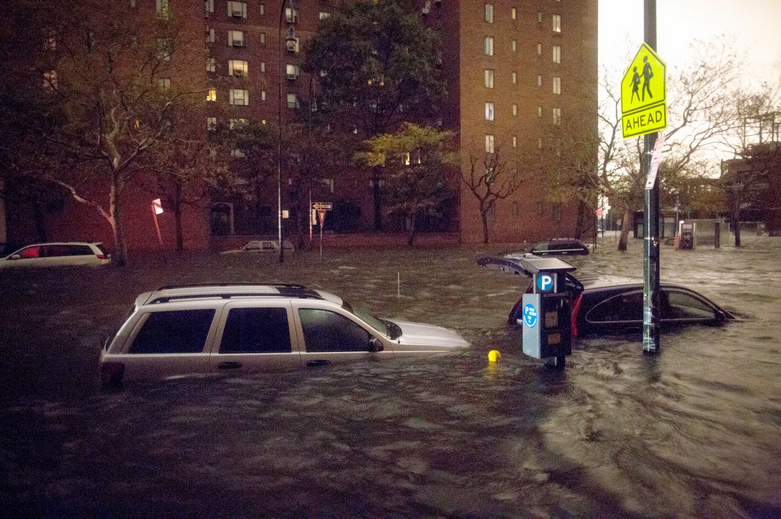
Among the natural disasters that might strike the NYC area, earthquakes rank very low on the list of probability. So it was startling yesterday when I felt that rocking motion. There was no construction going on, and the rocking was steady and all encompassing. As I work in emergency preparedness and response training in the region,  this is the second time in the past couple of years where a potential disaster scenario that we train on has come to life.

With two tornadoes within the past five years, and this earthquake (thankfully no major damage was done), please Irene steer clear of the NY/NJ metro area!

Every Day is Game Day

YouTube Preview Image

Within the circles of instructional design and learning fields that I travel in I often  hear talk about incorporating games as a great idea but one that needs to be approached carefully with decision makers. The decision makers feel that game is a dirty word, one upon which much scorn will be heaped dare they use it. So they hide the term with a number of other double speak terms (interactive assessment, low fidelity simulation, etc.) lest their designs be revealed and made fun of.

This is all a bit ridiculous. Let me tell you my friends that every day is game day. Let’s just consider the following:

  • Game Theory: just do a quick search of the term using Google, Bing, or any search engine. Its origins and exploration can be found in military strategy, economic studies, biology, and other important bodies of knowledge. Serious stuff, eh? Of course you may remark, these are serious games but then..
  • 10,000 hours= time children are in school from 5-12th grades= time outside school children are playing games (how is that for an equation!). Where do you think that child’s attention is more focused? Further to this, survey research shows that today’s children now spend two hours per day playing video games or some type of simulation vs. one hour of TV (hey they’re watching less TV, so that must be good!). Ah, but you say that these are children and not adults…
  • 70% of the Apps on (Apple) Itunes purchased are games, mostly by adults (and yes, mostly by women); need I say more.
  • What is the most watched TV program on the planet? American Idol, the Eurovision Song Awards, the Olympics (OK, you were close)…No. It is the World Cup, with over 3 Billion viewers, that is almost half the world’s population.
  • Look around you. On the subways, waiting at the airport, on buses, and even occasionally (so I hear) at work, besides updating their Facebook pages (is it a game?) or answering email, people are playing games. Casual games, serious games, simulation games, competitive games, they are all there and people playing them are engaged, so much so that they miss a train, a plan, a bus stop or something else (yes, mea culpa) while engrossed in a game.
  • Open your ears. Games are part of our language: get in the game, who’s got the ball, take one for the team, we scored a touchdown, hit it out of the ballpark, here’s the playbook, trying to game the system, game day, we’ve got game, in the zone, top of their game… and the list goes on.
  • When a person is involved in a game they are more engaged vs. passively listening to a lecture.

My firsthand experience has shown that when I present a class with a lecture they tend to sit back vs. standing up and actively seeking information.

Are you game?

Held at Harrisburg University of Science and Technology in the beautiful capital of Pennsylvania, LEEF is focused on gaming, simulation, and virtual world uses for education. I presented a brief overview of the reasons and process of developing the Hurricane Shelter Simulation Course we developed at CUNY SPS for the NYC Office of Emergency Management (see other posts below for more info). Posting on this to come.

Key learning points from this conference:

Imperial College London uses SL for medical training and proofs of concept, trying out a new infusion pump. They have also conducted a critical incident simulation around a dirty bomb scenario at a sporting arena.

Doug Maxwell of the U.S. Army Research, Development and Engineering Command (RDECOM) presented on Design Principles for Virtual Worlds (see Defense Gametech below; I heard Doug speak there as well). Some of his key points:

  • Try out different VWs to get a good idea of what affordances they offer.
  • Make sure that you differentiate between orientation and the actual training.
  • Where are you going to draw your content from? Make sure to pay attention to IP rights.
  • Who is going to create this? Do you have in-house labor,  students or developers, to build the 3D objects?

Doug spoke about theor MOSES Project and Big World (EDGE).

James Neville of Siterma, the World in 4D, gave a very thought provoking presentation Entertainment and Relaxation in Virtual Worlds

  • We expand when we relax and we grow when we expand.
  • We relax in the presence of novelty.
  • In a virtual world novelty needs to have sufficent detailing, different people, and a variety of conversations.
  • Theme is a gel; it is the net unifying idea that influences your operation, experience, & conduct.

In brief, in order to be entertained:

  • To be entertained in a virtual world it needs to have novelty, detail, other people (who can entertain them).

Last year I attended this conference virtually, which while less expensive, was like peering into a fishbowl and knocking on the glass (sending tweets for questions and offering comments) and attending via Second Life like sitting in the balcony seats with the cool kids, exchanging clever remarks. This event was hosted at the National Defense University which has a nice new modern building with a great auditorium (hey, this is where President Obama spoke when he explained to the public our strategy for bombing Libya) and presentation spaces, and put together by Dr. Paullete Robinson and her staff and colleagues. This cluster of buildings evokes the feeling of a US military academy (which it is similar to, except this is a like a graduate school for senior military and other related government officials etc.)

This year I had the honor and pleasure of attending in person (yes, can you imagine me, a proponent of virtual worlds- real human contact) conducting a workshop with my colleague, Dr. Anders Gronstedt and appearing  on two panels. You can watch my participation on the panel Virtual Worlds in Government: State and Federal Perspectives here:

YouTube Preview Image

and my participation in the other can be found at http://www.ndu.edu/iCollege/fcvw/agendaD2.html

Federal Virtual Worlds Challenge Artificial Intelligence Finalists – Technical Discussion also at the bottom, my avatar is Kazimir Malevich if you can catch me on the screen, although my name does appear there.

Note: there were some technical issues during this presentation, but, hey, what can you expect when you are on the bleeding edge of technology with so many firewalls.

One realization I came to during this conference is that I find that one of my greatest challenges on the job is finding time to play video games. So my recommendation to the kids out there is: play as many as you can before you get into the “real world” as you may not have time later.

The other one that came to mind was that our products (the course, exercises, tools, plans etc.) always have to be thought of in the Beta testing state of Continuous Improvement. This means we need to think about the development of our services and products in Beta stage with Gamma level quality delivery (i.e. always meets the expected needs, not a Beta product that does not function properly) and looking at how we can enhance them.

Some folks in the US Government are doing some highly creative work in virtual worlds (VWs). See some of the work of Eric Hackathorn at http://government.guildportal.com. Who would have thought of a government guild in World of Warcraft?! Then there is the highly engaging work done by NASA’s Dr. Daniel Laughlin who has developed in conjunction with Virtual Heroes the space mission simulation Moonbase Alpha which you can find at the following link http://www.nasa.gov/offices/education/programs/national/ltp/games/moonbasealpha/index.html

This has an Educator Guide as grade school teachers have been using this for teaching students about outer space exploration. They now have a follow on space simulation that will feature a mission to mars see http://www.virtualheroes.com/NewsImages/Roddenberry_NASA_MMO_Game.pdf

The future is already here, it is just unevenly distributed.- William Gibson

David Smith, Chief Innovation Officer for Lockheed Martin, has been involved in VWs since their start and has developed some of the larger platforms, establishing Teleplace, among other accomplishments. He points out that we are only at an early stages in our incorporation of virtual worlds, virtual reality, apps, and other newer technologies.

The computer is an instrument whose music is ideas -Alan Kay

David Smith sees us wearing computer technology and integrating that increasingly more seamlessly into our lives. Just think of a GPS device, Facebook, or Twitter and their use in everyday life. He said that augmented reality will light up a room the way a light bulb will, and he is right. Look at Google or Bing maps, and how we use them to find a restaurant or other local services. Now think of a smartphone with an external facing camera, just point and look with an app like Layar and your get an image on your 3D visual that can point out a number of different pieces of useful data.

He did show us some nifty sites, like Google Body 3D, http://bodybrowser.googlelabs.com. Where was this when I was taking high school biology?!

Chris Moore, CIO of City of Edmonton

Need I write more when this fellow has a desk-less office, has not printed out anything on paper in over two years (this is hardcore eco-friendly behavior to admire), and, more importantly, has developed a Second Life site for the City of Edmonton, see http://www.edmonton.ca/city_government/news/welcome-to-virtual-edmonton.aspx

and http://maps.secondlife.com/secondlife/Edmonton%201/55/17/57.

They are using it for a range of outreach, tourism, culture, civic engagement. Some very forward thinking he is pushing a concept called Workspace Edmonton allowing any device, anywhere, anytime to access City data, whether that is a Government employee or Citizen, this means all platforms, Android/Ipod/Browser etc., creating total access (restricted of course for sensitive work and data) and freedom of choice.. This is brilliant.

Mandy Salomon, Sr. Researcher, Swinburne University, Australia

Mandy told us about a very ambitious project by the Australian Government to roll out fiber optic networks to every house, building etc. within 9 years in Australia; it will carry 100 mbs. The Gov’t has bought out Telstra and is undertaking this infrastructure itself. Universal access and universal speed., creating a national  broadband network.

Here are some other great VW uses that were presented, some that may be familiar….

Claus Nemzhov’s 3d Avatar School. This school started with mandarin Chinese. They created a role play in Chinese with the scenario of crime scene. Students then need to act out in court. In other cases, students need to come up with excuses for why they don’t do the laundry using the objects that they are
given, using their Chinese language skills for practice with native speakers in the VW.

MK Haley, Carnegie Mellon (while not entierly VW related) Wii is a cross cultural, cross generational game box. She talked about the the Marshmellow Challenge- Analogue way to explore how VWs can be useful for team learning and development. See www.Marshmallowchallenge.com

There was a presentation An Ecosystem Approach to Designing in VWS Reusing code, reusing simulations, with a way to standardize the way SMEs translate what they know into VWs.

Dr. Chris Dede from Harvard spoke about work they did with VW platforms teaching grade school kids ecosystems. He highlighted some of the Core Challenges We Face for teaching:

  • Shifts in the knowledge and skills society values
  • Development of new methods of teaching and learning
  • Changes in the characteristics of learners

Emerging IT is reshaping each of these and changing how we learn and know. Key questions:

  • How do people learn?
  • What are we learning?
  • What methods do we have to learn?

Collaborative Problem resolution via Mediated Interaction, i.e. team based problem solving:

  • Problem finding before problem solving
  • Comprehensions by a Team, not an individual
  • Making meaning out of complexity:

Some of the other points he made:

  • Situated learning and transfer.
  • Constellations of architectural, social, organizational and materials vectors that aid in learning culturally based practices.
  • Apprenticeship (the process of moving from novice to expert within a given set of practices) will come back into play in specific professions (think fellows/graduate based meaningful internships).
  • Wireless mobile devices offer substantial power at a fraction of the cost of laptops and with greater mobility.
  • Entertainment and learning are infused anywhere
  • One to one person to device ratio becomes affordable in education

They are aiming for an educational data-plans for $15/month/per user with Eco MUVE with Ecomobile, cloud computing.  From the Institute for Education Sciences US Dept. of Education http://www.ed.gov/technology/netp-2010.  Intel, MS, and Cisco have begun an initiative to identify 21 century digital intelligence skills.

Naval Underseas Warefare Center (NUWC)

Design is not a single model but a process about how you got there.

Phillip Monte, NUWC. They collaborate through Virginia Block IV attack center. His unit is looking at VWs for command and control (C2) in  a visualized concept of  operations:

  • Audio Flow
  • Visual Flow
  • Control Flow
  • Data Flow

TANGO- VW Virtual Operation Center; able to provide a knowledgeable assistant. Intelligent Agents can replace the real agent. Create a whole record of an entire meeting.

The Future Beyond- Personal Next Steps

After this conference, some of the areas I am currently looking at exploring and possibly implementing are:

  • a capabilities assessment of virtual worlds. My friends at Daden Ltd. in the UK have developed a world finder that is a selection tool with a small number of virtual world (VW) platforms. You can find it here http://www.daden.co.uk/pages/virtual_world_finder.html
  • Looking at how we might apply NUWC C2 VW designs in an emergency operations center (EOC) to facilitate the common operation picture and united action.
  • Applying what we do to mobile apps, in particular single person drills to cover those individual knowledge and performance based training modules.
  • Mobile apps for field guides: information that is just-in-time for work  in the field of operation.
  • Further analyzing teamwork and learning vs. the individual in our own VW based training (see SL Hurricane Shelter Training Course).
  • Looking at the use of Artificial Intelligence (AI) Bots to mimic certain behaviors in disaster scenarios and to create injects for responders to address.
  • Trying to cut down on my own paper use (thanks for the benchmark Chris Moore!)

That is all for now. The adventure continues….


What I'm Doing...

Posting tweet...

Powered by Twitter Tools

3K2 theme by Hakan Aydin